
What are your strategies for SEO?
Let me tell you something: writing an article, publishing it and hoping people will find it are three different things.
When I started Motiv8You, I wanted to write. Simple. I had thoughts to share, experiences to put into words, lessons to reflect on and poems sitting somewhere in my heart, waiting to come alive on paper.
But somewhere along the way, I realized that writing the article was only part of the job. Getting people to discover it was another matter entirely.
Because what is the point of pouring your heart into an article, editing it, choosing a beautiful featured image and finally hitting that publish button, only for it to be sitting quietly on the Internet like a guest who arrived a party and nobody greeted? lol
That, my friend, is where SEO comes in.
So, What Exactly is SEO?
SEO stands for Search Engine Optimisation. In simple terms, it involves improving your website and content so that search engines like Google can understand them and help people discover them through relevant searches.
Think of it this way: you could write about overcoming fear but if someone searches for advice on overcoming fear and your article isn’t easy for search engines to understand, they might never come across your beautiful words.
SEO helps bridge that gap between what you write and the people searching for it.
Does it guarantee that your article will appear on the first page of Google? Absolutely not. If only it were that simple. lol
But it can increase your chances of being discovered and that makes learning it worthwhile.
My SEO Strategies as a Blogger
I’m still learning, experimenting and figuring out what works best for Motiv8You. However, there are a few things I’m paying more attention to.
1. Choosing the Right Keywords

Before publishing an article, I try to think about the words people might actually type into a search engine when looking for that particular topic.
For example, if I’m writing about learning to let go, I might consider phrases like how to let go of the past, learning to move on or how to move forward in life.
These are Keywords: the words and phrases people use when searching for information.
The trick is to choose relevant phrases that reflect what the article is genuinely about and incorporate them naturally into the writing.
Please, don’t stuff your article with the same Keywords until every other sentence starts sounding like a broken record. lol
You’re writing for human beings first.
Search engines need to understand your content but your readers still need to enjoy reading it.
2. Creating Titles That Make People Want to Read
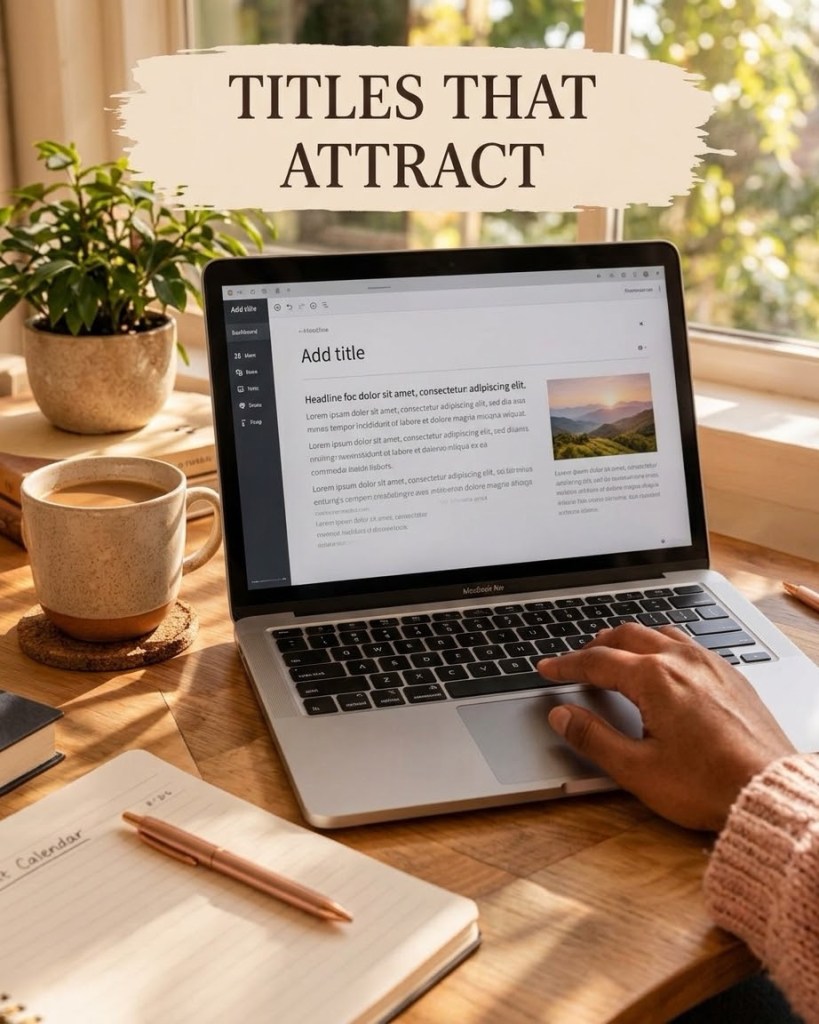
Your title matters.
It is often the first thing someone sees when your article appears in search results or gets shared online. It should give readers a clear idea of what to expect while making them curious enough to click.
For instance, a title like How to Train Your Mind to Focus on the Positive tells readers exactly what the article offers.
A title can be creative, emotional or even a little dramatic but clarity is important too.
I’ve learnt that a beautiful title is lovely but a beautiful title that communicates the subject of your article is even better.
We want the clicks but we also want readers to know what they’re clicking on. No misleading anybody in this house! lol
3. Paying Attention to My SEO title, Slug and Description
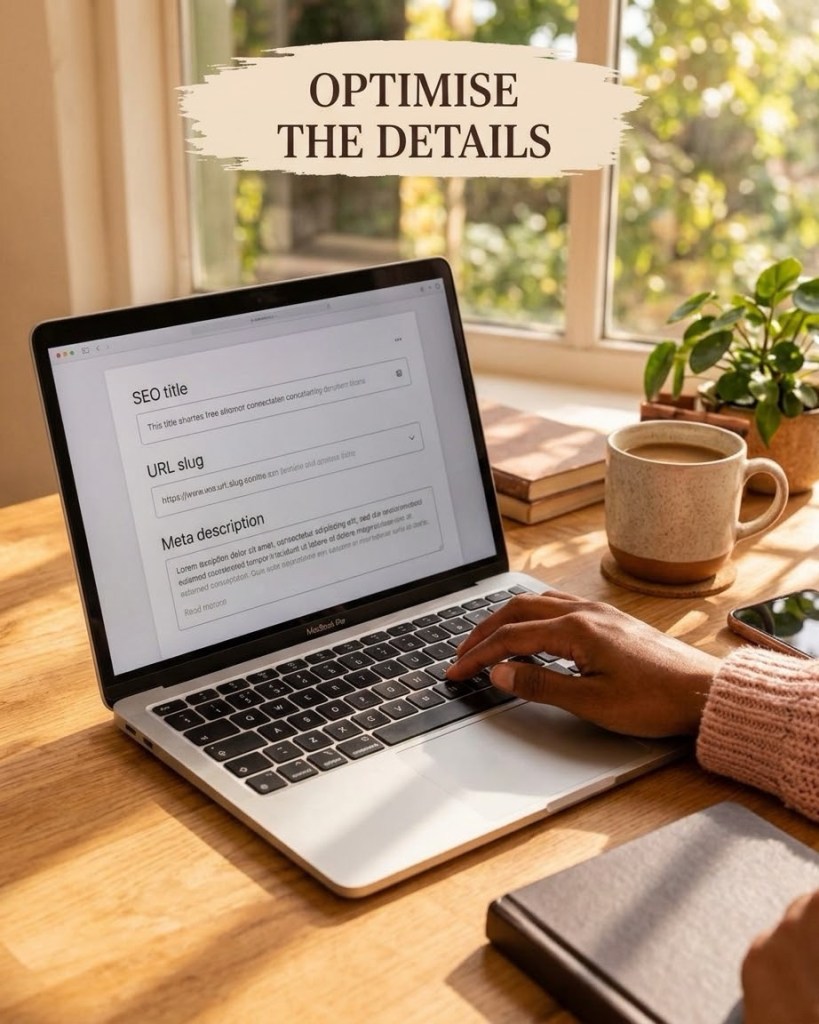
Now, this is where the small details come in.
When publishing on WordPress, I pay attention to a few elements that help describe my content.
The SEO title: This is the title search engines may display in search results. It can be different from the headline on your actual blog post.
The URL slug: This is the part of the web address that identifies a particular page. Keeping it short, readable and relevant makes it easier to understand.
The meta description: This is a short summary that may appear beneath your page title in search results. Google can choose a different snippet from the article, so the description isn’t guaranteed to appear exactly as written.
For example, if I publish an article about self care, I could use a clear slug such as self-care-and-self-preservation rather than a long web address filled with unnecessary words.
And if you’re using WordPress.com like I am, don’t panic if you cant find a separate box for every SEO field. Available settings depend on your plan, editor and site configuration. Your post title, URL and excerpt are still useful places to start.
We’re learning, not fighting the dashboard today. One battle at a time! lol
4. Writing Helpful, Original Content
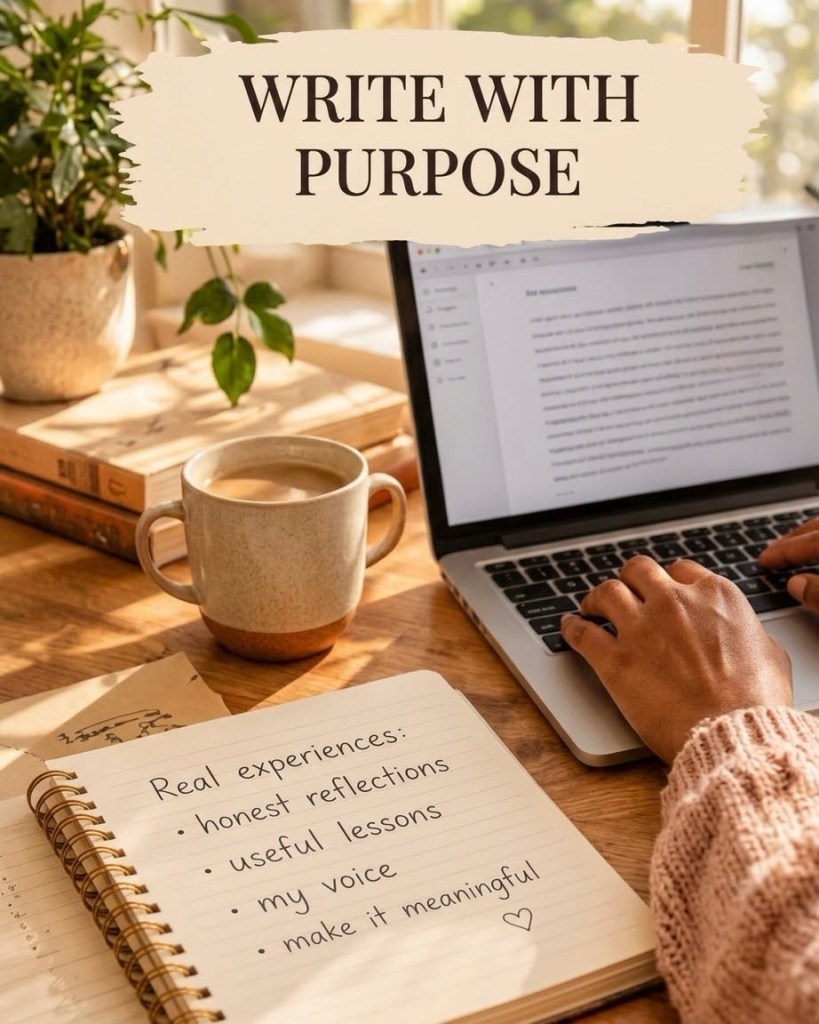
This one is especially important to me.
I write about experiences, lessons, reflections and things that life has taught me. I want people to read my articles and find something they can relate to, learn from or carry with them.
And I’ve come to understand that SEO isn’t simply about placing keywords in the right places. The content itself matters.
Does the article offer something useful? is it clear? Does it address the topic promised by the title? Does it bring a genuine perspective to the conversation?
For a personal blog like Motiv8You, our experiences can be a part of what makes the writing distinctive.
When I write about fear, I can share what it felt like to start again. When I write about faith, I can be honest about the moments when my confidence wavers. When I write about a train ride to Ibadan, I can take readers along for the disappearing WIFI, beautiful hills and that dramatic toilet flush that nearly announced the end of my journey! lol
Those seemingly little details make the writing personal and memorable.
I’m not trying to write like everybody else.
I’m trying to write something meaningful in my own voice.
5. Using Headings, Images and Alt Text Properly
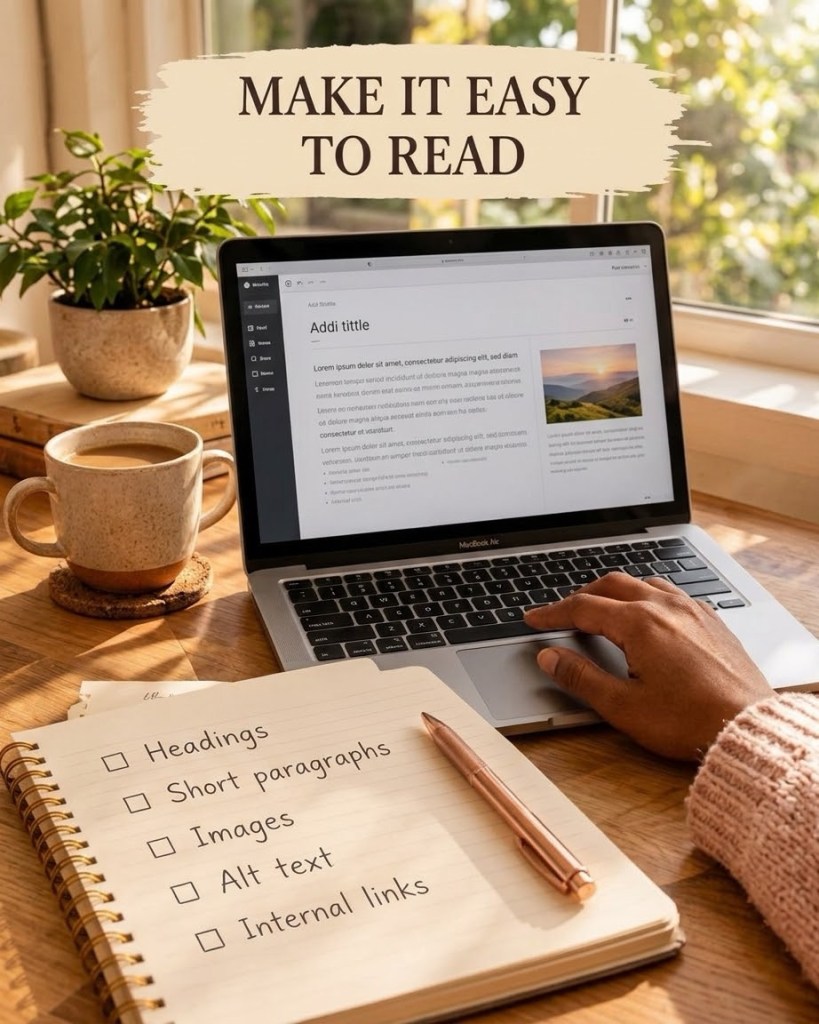
Let’s be honest, a huge block of text can make a reader’s eyes tired before they’ve even started reading. lol
Breaking an article into clear sections with headings makes it easier to navigate, especially when the article covers several points.
I also pay attention to my featured images because I want my posts to look inviting when people visit the blog or encounter them on social media.
But there’s more to images than looking pretty.
Descriptive alternative text, commonly called alt text, helps explain an image’s content to people using screen readers and can help search engines understand relevant visual content.
For example, if an article features a photograph of a train travelling through green hills, the alt text should describe what the image actually shows.
It shouldn’t just be a random collection of keywords.
The goal is to make the content more accessible and understandable, not to turn every image into an SEO advertisement. lol
6. Sharing My Articles Beyond the Blog

Publishing an article doesn’t mean I should fold my arms and wait for visitors to magically appear.
I share my writing on platforms like Facebook, X, WhatsApp and Pinterest because I want more people to discover Motiv8You.
Sometimes, a short, catchy caption can make someone curious enough to visit the blog. A Pinterest pin can help someone discover an older article while searching for inspiration. And a WhatsApp status can introduce my writing to someone who might never have stumbled across it otherwise.
Social media likes and shares aren’t direct Google ranking factors but sharing can bring readers to your website and help your content reach a wider audience.
So, no, I don’t intend to publish an article and immediately disappear into the nearest bush. lol
The work doesn’t end when I hit publish.
7. Being Consistent and Patient
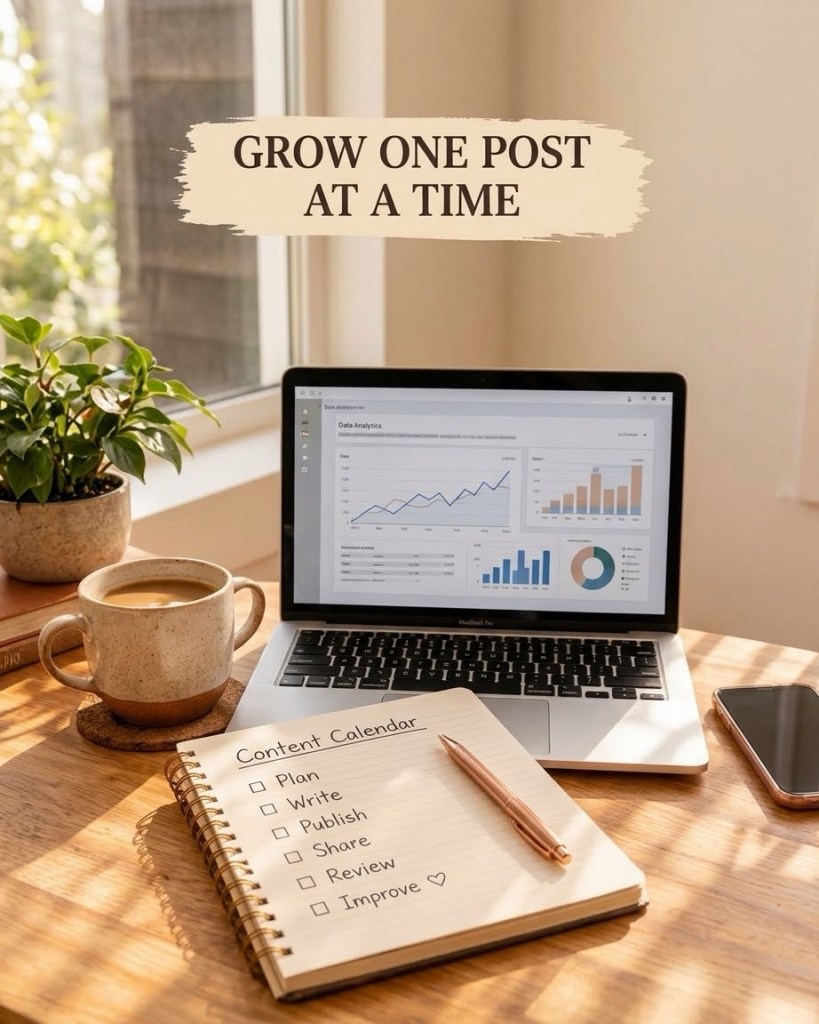
Ah, patience. The part nobody wants to hear about. lol
We live in a world where we want results quickly. You publish today and tomorrow you want visitors, comments, shares and perhaps a small standing ovation.
Is that too much to ask? Apparently, the internet thinks so! lol
SEO takes time. Search engines need to discover and process pages, and even then, there is no guarantee that a page will rank prominently.
I’m learning to focus on what I can control; creating useful content, improving my articles, making my website easier to navigate and paying attention to how people discover my work.
Where available, tools such as Google Search Console can help me see which searches bring people to my website, which pages receive impressions and clicks and whether there are technical issues worth addressing.
Instead of guessing forever, I can gradually learn from the information available.
I may not see immediate results but that doesn’t mean every effort is wasted.
What I’m Learning About SEO
If there’s one thing this blogging journey is teaching me, it’s that writing and visibility go hand in hand.
I can write from the heart and still learn how to make my work easier to find. I can stay true to my voice while improving my titles, descriptions, headings and website structure.
SEO doesn’t have to mean sacrificing creativity or turning every article into a collection of keywords.
It is about making it easier for the right people to discover content that speaks to them.
And honestly, I’m enjoying the process of learning something new, even when the technical side occasionally makes me want to close my tablet, drink water and mind my business. lol
I’m building Motiv8You one article at a time, learning as I go, and finding new ways to help my words travel beyond the little corner of the internet I’ve created.
Because I don’t just want to write and publish.
I want my words to find the people who need them, the people who can relate to them, and the people who might leave with a fresh perspective.
And if learning SEO helps those words travel a little farther, then I’ll keep learning.
One keyword, one article and one small improvement at a time.
Here’s to writing with purpose, learning without shame and giving our words a better chance of being found.


READ. FEEL. REFLECT. THEN TALK TO ME. I’d love to hear from YOU.